|
Huihuinga O Te Kāhui Māori O Taitokerau Thursday 12 March 2026 at 1.00pm
|
|
|
|
|
|
Huihuinga O Te Kāhui Māori O Taitokerau Thursday 12 March 2026 at 1.00pm
|
|
|
|
|
12 March 2026
Rārangi Take O Te Kāhui Māori O Taitokerau
(TE RUARANGI)
Meeting to be held in the Council Chamber
36 Water Street, Whangārei and via audio visual link
On Thursday 12 March 2026, commencing at 1.00pm - 2.30pm
Please note: working parties and working groups carry NO formal decision-making delegations from council. The purpose of the working party/group is to carry out preparatory work and discussions prior to taking matters to the full council for formal consideration and decision-making. Working party/group meetings are open to the public to attend (unless there are specific grounds under LGOIMA for the public to be excluded).
NGĀ MANA WHAKAHAERE
(MEMBERSHIP OF TE RUARANGI)
Heamana Tokorua (Co-Chairs):
Arama Morunga, Councillor and Nyze Manuel, Te Rūnanga O Whaingaroa
Councillor Amy Macdonald
Councillor Colin Kitchen
Councillor Geoff Crawford
Councillor Jack Craw
Councillor Joe Carr
Councillor John Blackwell
Councillor John Hunt
Councillor Pita Tipene (NRC Chair)
Kahukuraariki Trust Board, Geraldine Baker
Ngāti Hau, Mike Kake
Ngāti Hine, Jaycee Tipene-Thomas
Ngāti Kuta, Michelle Elboz
Ngāti Manu, Hon Kelvin Davis
Ngāti Tara, Mahue Greaves
Ngātiwai Trust Board, Aperahama Edwards
Patuharakeke Iwi Trust Board, Juliane Chetham
Te Parawhau Hapū Authority Charitable Trust, Mira Norris
Te Roroa, Delilah Te Aōrere Parore-Southon
Te Rūnanga Nui o Te Aupōuri, Niki Conrad
Te Rūnanga O Ngāti Rehia, Kipa Munro
Te Rūnanga o Ngāti Whātua, Ihapera Paniora
Te Rūnanga o Te Rarawa, Abe Witana
Te Rūnanga-Ā-Iwi-O-Ngāpuhi, Janelle Beazley
Te Uri o Hau Settlement Trust, Georgina Connelly
Te Waiāriki, Ngāti Korora, Ngāti Takapari, Arvay Armstrong-Read
Te Whakaminenga o te Hikutu Hapū-Whanau Lynette Wharerau
Te
Whakapiko Hapū, Rowan Tautari
|
Commonly used terms and abbreviations |
|
|
AP |
Annual Plan |
|
CEO |
Chief Executive Officer |
|
CPCA |
Community Pest Control Areas |
|
DOC |
Department of Conservation |
|
FNDC |
Far North District Council |
|
GIS |
Geographic Information System |
|
IHEMP |
Iwi/Hapū Environmental Management Plan |
|
ILGACE |
Iwi and Local Government Chief Executives Forum |
|
KDC |
Kaipara District Council |
|
LAWA |
Land, Air, Water Aotearoa |
|
LEA |
Local Electoral Act 2001 |
|
LGA |
Local Government Act 2002 |
|
LGNZ |
Local Government New Zealand |
|
LIDAR |
Light detection and ranging |
|
LTP |
Long Term Plan |
|
MBIE |
Ministry of Business, Innovation & Employment |
|
MfE |
Ministry for the Environment |
|
MOT |
Ministry of Transport |
|
MPI |
Ministry for Primary Industries |
|
MTAG |
Māori Technical Advisory Group (a sub-group of Te Ruarangi) |
|
NES |
National Environmental Standards |
|
NINC |
Northland Inc. Limited |
|
NIWA |
National Institute of Water and Atmosphere |
|
Non-elected member (Te Ruarangi) |
One of the up to twenty-one appointed iwi and hapū members from Te Taitokerau. Members are appointed in accordance with the Terms of Reference. |
|
NPS |
National Policy Statement |
|
NPS-FM |
National Policy Statement for Freshwater Management |
|
RMA |
Resource Management Act 1991 |
|
RP |
Regional Plan |
|
Te Ruarangi caucus |
Comprises the non-elected iwi and hapū members of Te Ruarangi |
|
TKoT |
Te Kahu o Taonui (Iwi Chairs) |
|
TOR |
Terms of Reference |
|
TPK |
Te Puni Kōkiri (Ministry of Maori Development) |
|
TTMAC |
Taitokerau Māori and Council Working Party (former name of Te Ruarangi) |
|
TTNEAP |
Tai Tokerau Northland Economic Action Plan |
|
TWWAG |
Tāngata Whenua Water Advisory Group |
|
WDC |
Whangarei District Council |
KARAKIA / WHAKATAU
RĪMITI (ITEM) Page
1.0 Ngā Mahi Whakapai/Housekeeping
2.0 NGĀ WHAKAPAHĀ/apologies
3.0 NGA WHAKAPUAKANGA/declarations of interest
4.1 Record of Actions – 19 February 2026 4
4.2 Receipt of Action Sheet 11
MĀORI REPRESENTATION
4.3 Draft Terms of Reference 13
WAI/MARINE, CLIMATE CRISIS
4.4 Wānanga Waiora and Climate Change Summit 2026 27
OTHER REPORTS FOR NOTING
4.5 Reports from Other Working Parties 31
4.6 Chief Executive’s Report to Council 33
12 March 2026
|
TITLE: |
Record of Actions – 19 February 2026 |
|
From: |
Sally Bowron, Strategic Partnerships and Engagement Group Admin/PA |
|
Authorised by Group Manager/s: |
Auriole Ruka, Pou Manawhakahaere - Strategic Partnerships and Engagement, on 10 March 2026 |
Whakarāpopototanga / Executive summary
The purpose of this report is to present the Record of Actions of the last meeting (attached) held on 19 February 2026 for review by the meeting.
Attachments/Ngā tapirihanga
Attachment 1:
Unconfirmed record of actions - 19 February 2026 ⇩ 
12 March
2026
This page is a placeholder for a single page of a PDF attachment. It will be replaced by the actual PDF page when the PDF version of this document is generated.
Report: Record of Actions – 19 February 2026
Attachment: Unconfirmed record of actions - 19 February 2026
Page: 1
This page is a placeholder for a single page of a PDF attachment. It will be replaced by the actual PDF page when the PDF version of this document is generated.
Report: Record of Actions – 19 February 2026
Attachment: Unconfirmed record of actions - 19 February 2026
Page: 2
This page is a placeholder for a single page of a PDF attachment. It will be replaced by the actual PDF page when the PDF version of this document is generated.
Report: Record of Actions – 19 February 2026
Attachment: Unconfirmed record of actions - 19 February 2026
Page: 3
This page is a placeholder for a single page of a PDF attachment. It will be replaced by the actual PDF page when the PDF version of this document is generated.
Report: Record of Actions – 19 February 2026
Attachment: Unconfirmed record of actions - 19 February 2026
Page: 4
This page is a placeholder for a single page of a PDF attachment. It will be replaced by the actual PDF page when the PDF version of this document is generated.
Report: Record of Actions – 19 February 2026
Attachment: Unconfirmed record of actions - 19 February 2026
Page: 5
This page is a placeholder for a single page of a PDF attachment. It will be replaced by the actual PDF page when the PDF version of this document is generated.
Report: Record of Actions – 19 February 2026
Attachment: Unconfirmed record of actions - 19 February 2026
Page: 6
12 March 2026
|
TITLE: |
Receipt of Action Sheet |
|
From: |
Sally Bowron, Strategic Partnerships and Engagement Group Admin/PA |
|
Authorised by Group Manager/s: |
Auriole Ruka, Pou Manawhakahaere - Strategic Partnerships and Engagement, on 10 March 2026 |
Whakarāpopototanga / Executive summary
The purpose of this report is to enable the meeting to receive the current action sheet.
That the action sheet be received.
Attachments/Ngā tapirihanga
Attachment 1:
Action sheet ⇩ 
12 March
2026
This page is a placeholder for a single page of a PDF attachment. It will be replaced by the actual PDF page when the PDF version of this document is generated.
Report: Receipt of Action Sheet
Attachment: Action sheet
Page: 1
12 March 2026
|
TITLE: |
Draft Terms of Reference |
|
From: |
Auriole Ruka, Pou Manawhakahaere - Strategic Partnerships and Engagement and Ruben Wylie, Pou Tiaki Taiao |
|
Authorised by Group Manager/s: |
Ruben Wylie, Pou Tiaki Taiao and Auriole Ruka, Pou Manawhakahaere - Strategic Partnerships and Engagement, on 10 March 2026 |
Whakarāpopototanga/Executive summary
At the 11 December 2025 Te Ruarangi Meeting, the working party endorsed commencing a review of its terms of references via a working group comprising Te Ruarangi Co-Chairs, Cr Arama Morunga and Nyze Manuel, Iwi/hapū representatives Ihapera Paniora (Te Rūnanga o Ngāti Whātua) and Kipa Munro (Te Rūnanga o Ngāti Rehia), and council representatives Chair Pita Tipene and Cr Amy Macdonald.
The purpose of this report is to present draft terms of reference following the review process for consideration and endorsement by Te Ruarangi. Following endorsement, the revised terms of reference will be brought to the next available council meeting for adoption.
1. That the report ‘Draft Terms of Reference’ by Auriole Ruka, Pou Manawhakahaere - Strategic Partnerships and Engagement and Ruben Wylie, Pou Tiaki Taiao and dated 6 March 2026, be received.
2. That Te Ruarangi endorse the draft terms of reference provided as Attachment 1 to this report.
3. That Te Ruarangi note that the terms of reference will undergo formatting and grammatical checks as they are finalised, and this will include updates to the te reo subtitles for the headings.
Tuhinga/Background
At the 11 December 2025 Te Ruarangi Meeting, the working party endorsed commencing a review of its terms of references via a working group comprising Te Ruarangi Co-Chairs, council elected members and representatives from the iwi/hapū caucus. Since that meeting, the working group has met on three occasions with the support of senior council staff to undertake the review.
A summary of key changes are set out below:
Clauses 1-5
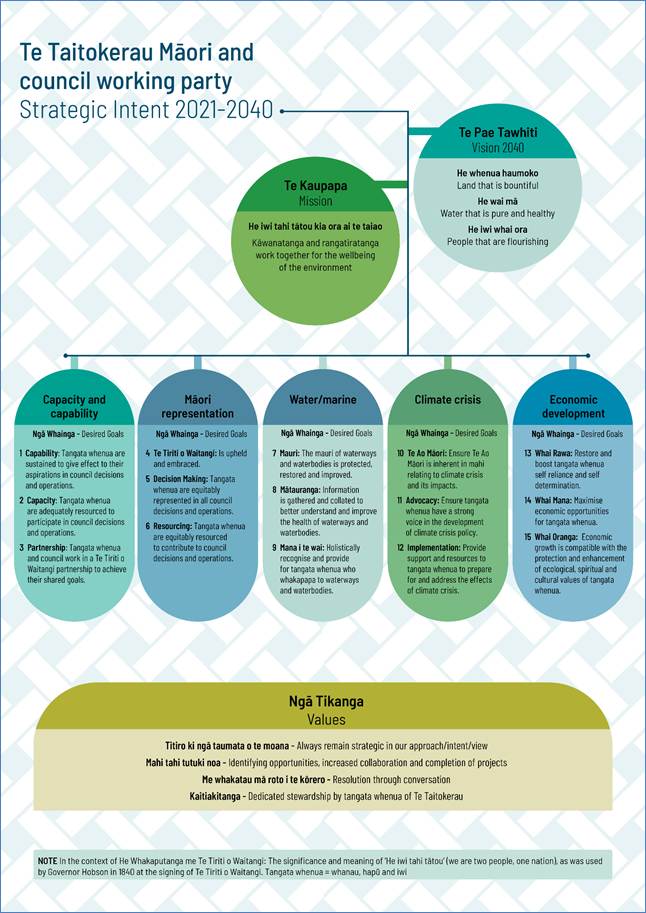
Over the course of the review process, it was apparent that the current terms of reference needed to be updated to create a clear connection between Tāiki ē and Te Ruarangi Strategic Intent. The draft terms of reference achieve this by reflecting the vision, mission and values of the Strategic Intent, coupled with the clear language contained in Tāiki ē with respect to council’s commitment to giving effect to its responsibilities to tāngata whenua under Te Tiriti o Waitangi. The wording in the terms of reference in respect of these elements are generally verbatim from the Strategic Intent and Tāiki ē.
Clauses 6-7
The objectives section in the current terms of reference has been renamed to Roles and Responsibilities and are generally unchanged apart from the inclusion of Te Ruarangi having oversight of the implementation of Tāiki ē and council’s Te Tiriti commitments, which reflects the current situation. Section 7 was derived both from the current terms of reference and is an amalgamation of clauses 2-4 and 7.
Clause 8
Key changes to this section include clarification of the role of proxies (new section 8.4) and a new clause to provide for a temporary increase in membership (32 as opposed to 30) with a sinking lid clause (8.2). The proxy clause is derived from the current terms of reference but includes changes to make it clear that speaking rights for proxies, and a seat at the table, are only applicable when the main representative is absent from the meeting. Furthermore, claiming for a meeting allowance is only available for proxies when they are standing in for the main representatives. The sinking lid clause is proposed as a means of reflecting that the membership technically exceeds available seats when accounting for iwi seats. The clause prevents the needs to remove active hapū members to achieve the maximum seat allocation while providing time to confirm both active iwi and hapū participation.
Clause 13
Clause 13 in a new clause that is proposed to clarify the status of Te Ruarangi following triennial elections. It does not remove the ability for council review the working party following election.
The remainder of the clauses are derived from the current terms of reference save for minor amendments.
Attachment 1:
Draft Te Ruarangi Terms of Reference ⇩ 
12 March
2026
This page is a placeholder for a single page of a PDF attachment. It will be replaced by the actual PDF page when the PDF version of this document is generated.
Report: Draft Terms of Reference
Attachment: Draft Te Ruarangi Terms of Reference
Page: 1
This page is a placeholder for a single page of a PDF attachment. It will be replaced by the actual PDF page when the PDF version of this document is generated.
Report: Draft Terms of Reference
Attachment: Draft Te Ruarangi Terms of Reference
Page: 2
This page is a placeholder for a single page of a PDF attachment. It will be replaced by the actual PDF page when the PDF version of this document is generated.
Report: Draft Terms of Reference
Attachment: Draft Te Ruarangi Terms of Reference
Page: 3
This page is a placeholder for a single page of a PDF attachment. It will be replaced by the actual PDF page when the PDF version of this document is generated.
Report: Draft Terms of Reference
Attachment: Draft Te Ruarangi Terms of Reference
Page: 4
This page is a placeholder for a single page of a PDF attachment. It will be replaced by the actual PDF page when the PDF version of this document is generated.
Report: Draft Terms of Reference
Attachment: Draft Te Ruarangi Terms of Reference
Page: 5
This page is a placeholder for a single page of a PDF attachment. It will be replaced by the actual PDF page when the PDF version of this document is generated.
Report: Draft Terms of Reference
Attachment: Draft Te Ruarangi Terms of Reference
Page: 6
This page is a placeholder for a single page of a PDF attachment. It will be replaced by the actual PDF page when the PDF version of this document is generated.
Report: Draft Terms of Reference
Attachment: Draft Te Ruarangi Terms of Reference
Page: 7
This page is a placeholder for a single page of a PDF attachment. It will be replaced by the actual PDF page when the PDF version of this document is generated.
Report: Draft Terms of Reference
Attachment: Draft Te Ruarangi Terms of Reference
Page: 8
This page is a placeholder for a single page of a PDF attachment. It will be replaced by the actual PDF page when the PDF version of this document is generated.
Report: Draft Terms of Reference
Attachment: Draft Te Ruarangi Terms of Reference
Page: 9
This page is a placeholder for a single page of a PDF attachment. It will be replaced by the actual PDF page when the PDF version of this document is generated.
Report: Draft Terms of Reference
Attachment: Draft Te Ruarangi Terms of Reference
Page: 10
This page is a placeholder for a single page of a PDF attachment. It will be replaced by the actual PDF page when the PDF version of this document is generated.
Report: Draft Terms of Reference
Attachment: Draft Te Ruarangi Terms of Reference
Page: 11
This page is a placeholder for a single page of a PDF attachment. It will be replaced by the actual PDF page when the PDF version of this document is generated.
Report: Draft Terms of Reference
Attachment: Draft Te Ruarangi Terms of Reference
Page: 12
12 March 2026
|
TITLE: |
Wānanga Waiora and Climate Change Summit 2026 |
|
From: |
Auriole Ruka, Pou Manawhakahaere - Strategic Partnerships and Engagement and Natalie Child, Climate Action & Natural Hazards Manager |
|
Authorised by Group Manager/s: |
Louisa Gritt, Group Manager - Community Resilience and Auriole Ruka, Pou Manawhakahaere - Strategic Partnerships and Engagement, on 10 March 2026 |
Whakarāpopototanga/Executive summary
The proposed Wānanga Waiora and Climate Change Summit (Wānanga Waiora) is intended to be a regionally significant, action‑oriented wānanga that continues to strengthen kaitiaki networks and build community resilience across Taitokerau.
At the February 2026 Te Ruarangi meeting it was proposed to hold a three-day wānanga programme to incorporate a Climate Change Summit being developed by Mike Smith, Kaupapa Maori Climate Change Advisor and the NRC Climate Action and Natural Hazards team.
A third day, focused on Māori Economic Development, was also proposed. This was endorsed in principle, with the programme to be developed by the Māori Technical Advisory Group (MTAG). Subsequently, MTAG met twice to confirm the desired outcomes and to finalise the programme for Wānanga Waiora 2026.
Accordingly, the purpose of this report is to present the desired outcomes (whainga) and the final draft programme for the 2026 Wānanga Waiora, for endorsement at the Te Ruarangi meeting.
The report also recommends that, due to resource limitations and current constraints, the wānanga be delivered as a two‑day event, and that Māori economic development be addressed through a separate, dedicated event. This will enable sufficient time and engagement with key stakeholders and agencies to ensure that mahi is delivered to a high standard.
If the programme is endorsed, staff will continue working with MTAG to confirm the planning and logistics for the wānanga. Further detail is provided in the background section.
1. That the report ‘Wānanga Waiora and Climate Change Summit 2026’ by Auriole Ruka, Pou Manawhakahaere - Strategic Partnerships and Engagement and Natalie Child, Climate Action & Natural Hazards Manager and dated 4 March 2026, be received.
2. That Te Ruarangi endorse the proposed programme and outline for Wānanga Waiora and the Climate Change Summit 2026.
Tuhinga/Background
Wānanga Waiora Day 1 & Climate Change Summit Day 2
Dates are still to be confirmed. The preferred venue at this stage is Te Tiriti o Waitangi Marae in Waitangi, with the use of marquees to accommodate 200–250 attendees.
The outcomes for Day 1 are to focus on kaitiaki aspirations for the taiao, with an emphasis on:
· Impacts of current government reforms, particularly on freshwater and the roles of kaitiaki
· Resource and funding constraints and the need for coordinated protection of region’s waterways.
The outcomes for Day 2, whilst maintaining the mauri of Day 1, are:
· An action‑focused hui that connects community experience, and resources into practical adaptation and resilience planning
· Strengthened leadership regional networks and pathways for ongoing engagement that advance leveraging what is working well for communities and how to address the gaps that impact community well-being.
Day 1: Wānanga Waiora – Kaitiaki Aspirations and Partnerships
· 9:00am – 9:30am: Karakia & Mihi Whakatau – Opening the wānanga and setting collective intentions.
· 9:30am – 10:30am: Part 1: Current Kaitiaki Work – Strategic intent and regional vision for Te Mana me te Mauri o te Wai, featuring insights from iwi-council partnerships and local catchment management.
· 10:30am – 11:00am: Kapu Tī / Networking.
· 11:00am – 12:30pm: Part 2: Environmental Realities – Addressing floods, storms, and the lived experience of disasters in our waterways, including traditional cultivation and innovative water management.
· 12:30pm – 1:00pm: Guest Speaker – The relationship between water health, food systems, and hapū wellbeing.
· 1:00pm – 2:00pm: Kai Break.
· 2:00pm – 3:30pm: Impact of Government Reforms – A critical session on the loss of tools and funding due to legislative shifts and the need for coordinated protection.
· 3:30pm – 4:00pm: Part 3: Future Direction & Collective Wero – Open floor to define the regional action plan and maintain the mauri of the wānanga into Day 2.
Day 2 Climate Change Summit (Draft)
8:30 – 9:00 | Mihi Whakatau & Registration
9:00 – 9:30 | Opening Plenary
Why Te Tai Tokerau Must Act Now
· Welcome from Summit, Purpose and outcomes of the summit
· Purpose: setting the context: climate impacts are no longer future risk — they are present reality
9:30 – 10:15 | Keynote Address
The Climate Outlook for Te Tai Tokerau delivered by relevant experts.
10:15 – 11:00 | Panel 1 – Impacts on the Ground
Northland at Risk: What Communities Are Experiencing
Purpose – to ground the day in lived experience and real-world impacts.
11:20 – 12:00 | Civil Defence Briefing
Recent Rainfall and Flooding Event: Impacts, Response, and Lessons
Led by: Northland Civil Defence / Emergency Management focus areas:
Purpose: To provide a shared understanding of emergency realities and inform stronger community-level planning
12:00 – 12:45 | Workshop 1 – From Resilience to Adaptation
12:45 – 1:30 | Lunch & Climate Expo
· Displays from councils, iwi, Civil Defence, community projects, rangatahi initiatives, Informal networking
1:30 – 2:15 | Panel 2 – Adaptation and Mitigation Pathways - What Works in Te Tai Tokerau
FNDC presents adaptation planning
Discussion on:
· Flood mitigation and catchment management
· Nature-based solutions: Real / Fake
· Water, food, and energy resilience
· Transport and emissions reduction
· Māori-led restoration and land use approaches
· What are the long term and systemic planning issues.
2:15 – 3:15 | Workshop 2 – Establishing Subregional Climate Networks
From Region to Rohe: Building Local Leadership
Participants break into subregional groups:
· Far North / Te Hiku
· Whangaroa / Eastern Coast
· Hokianga / Mid-North
· Whangārei
· Kaipara
Each group will:
· Confirm a subregional climate network
· Identify convenors and key participants
· Prioritise local climate and emergency risks
· Identify preparedness and adaptation gaps
· Agree next steps for site-specific adaptation strategies
· Nominate representatives to the regional forum
3:15 – 3:30 | Afternoon Break
3:30 – 4:30 | Rangatahi Session
Our Future, Our Responsibility
· Rangatahi reflections on climate impacts and emergency events
· Youth-led preparedness and resilience ideas
· Intergenerational leadership and continuity
4.30pm | Weaving the Networks Together
· Report-backs from subregional groups
· Key lessons from the Civil Defence briefing integrated into planning
· Confirmation of next steps and timelines (buy in for the roadshow)
4:40 – 5:00 | Closing Remarks & Karakia
Reflections from kaumātua and rangatahi
· Karakia whakamutunga
5:00 onwards | Kai & Informal Networking
Nil
12 March 2026
|
TITLE: |
Reports from Other Working Parties |
|
From: |
Sally Bowron, Strategic Partnerships and Engagement Group Admin/PA |
|
Authorised by Group Manager/s: |
Auriole Ruka, Pou Manawhakahaere - Strategic Partnerships and Engagement, on 10 March 2026 |
Whakarāpopototanga/Executive summary
A summary of the key topics from both the Natural Resources Working Party and the Biosecurity and Biodiversity Working Party is provided to update Te Ruarangi on the wider governance mahi that iwi and hapū members are contributing to across council.
1. That the report ‘Reports from Other Working Parties ’ by Sally Bowron, Strategic Partnerships and Engagement Group Admin/PA and dated 6 March 2026, be received.
Tuhinga/Background
Natural Resources Working Party
Members:
|
Chair |
Cr Geoff Crawford |
|
Councillors |
Crs John Blackwell, Amy Macdonald and Arama Morunga |
|
Te Ruarangi iwi and hapū representatives |
Janelle Beazley (Te Rūnanga Ā Iwi o Ngāpuhi), Abe Witana (Te Rūnanga o Te Rarawa), Ihapera Paniora (Te Rūnanga o Ngāti Whātua), Mahue Greaves (Ngāti Tara) |
Working Party purpose:
· Provide oversight on council’s resource management planning and regulatory activities.
· Provide oversight on activities that contribute to or influence the quality & quantity of water including land management and environmental monitoring.
· Oversee the implementation of the Proposed Regional Plan.
· Be the governance entity for the policy implementation of Essential Freshwater.
· Make recommendations to council on appeals and recommendations to accept, adopt or reject private plan change applications.
Key topics discussed at 25 February 2026 meeting
1. Taumārere Business Case – Next Steps
2. Strategic Review of NRC’s Natural Resources Unit
3. Land Management Work Programme
4. January Weather Event – Operational Learnings
Biosecurity & Biodiversity Working Party
|
Chair |
Cr Jack Craw |
|
Councillors |
Crs Geoff Crawford, John Hunt, Amy Macdonald |
|
Te Ruarangi iwi and hapū representatives |
Jaycee Tipene-Thomas (Ngāti Hine), Kipa Munro (Te Rūnanga o Ngāti Rehia), Mira Norris (Te Parawhau Hapū Authority Charitable Trust), Niki Conrad (Te Rūnanga Nui o Te Aupōuri) |
Purpose
· Provide oversight on council’s biosecurity and biodiversity activities.
· Oversee the implementation of the Regional Pest Management Plan (RPMP), Marine Pathway Plan (MPP) & regularly report progress to council.
Key topics discussed at 25 February 2026 meeting
1. Kauri Protection – Action Sheet Update
2. Myrtle Rust Update
3. Wild Deer Eradication Programme
4. Caulerpa Response
5. Biodiversity Programme Update
6. Regional Pest Management Plan (RPMP)
7. Gold Clam Response
Nil
12 March 2026
|
TITLE: |
Chief Executive’s Report to Council |
|
From: |
Jonathan Gibbard, Tāhūhū Rangapū - Chief Executive Officer |
|
Authorised by Group Manager/s: |
Jonathan Gibbard, Tāhūhū Rangapū - Chief Executive Officer, on 11 February 2026 |
That the report ‘Chief Executive’s Report to Council’ by Jonathan Gibbard, Tāhūhū Rangapū - Chief Executive Officer and dated 6 March 2026, be received.
4.6.1 Highlights
Freshwater Pests – Freshwater Invasive Clam (Gold Clam)
Annual biosecurity checks commenced at Lake Taharoa on 19 December, and are being delivered in partnership with the iwi of Te Roroa and Te Kuihi hapū, marking the third consecutive year of this programme. Checkpoints are operating daily from 8:30am to 4:30pm through to the end of summer. To strengthen capacity for the season, staff provided specialist training enabling ambassadors to operate as warranted officers under the Biosecurity Act.
These checks remain a critical preventative measure to protect Kai Iwi Lakes and wider Northland waterways from the invasive freshwater gold clam and other high-risk aquatic pests.
All visitors to Lake Taharoa are now required to complete a self-certification before entering the lake, confirming adherence to the Check, Clean, Dry protocol. This requirement is particularly important for those bringing equipment from outside the region. As of 22 January, a total of 715 self-certifications have been filled out.
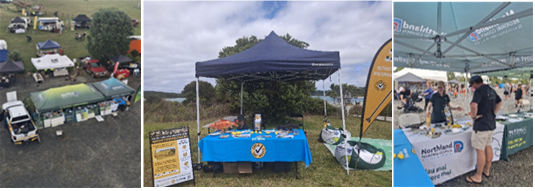
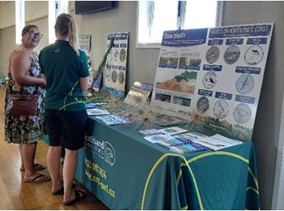
Alongside the checkpoint operations two new Check, Clean, Dry ambassadors have maintained a strong regional presence throughout the summer. In addition to their work at Kai Iwi Lakes, they have engaged with the public at key events including waka ama competitions, multisport events, and A&P shows, and will continue this outreach at upcoming Northland Field Days and Waitangi Day celebrations.
These relationships have supported effective on-the-ground engagement and strengthened local ownership of freshwater biosecurity messaging. Targeted outreach to five kura, multiple waka ama groups – including Ngā Hoe Horo, Kaihoe o Ngāti Rehia Trust Waka Ama, and Rangaunu Sports Club – as well as other freshwater users such as Scouts Regatta participants, has been well received.
Looking ahead, we will continue in-person education and engagement through community events and kura visits across Taitokerau. Collectively, these actions represent a significant uplift in our frontline freshwater biosecurity effort for the summer season.
|
|
|
Ambassadors out and about at events across the region. |
Awanui Lower Stop Bank Assessment and Options:
An initial review of the LiDAR and high-level options have been completed; the team has met with
Waikato Regional Council coastal stop bank experts to form best practice. Staff will look to pick-up
A survey and a conditional assessment along with modelling in the coming months.
Civil Defence Emergency Management
January Severe weather Event 2026
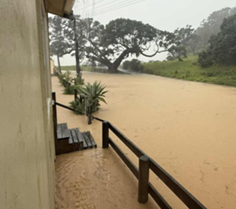
Northland experienced two significant and compounding weather events in January 2026 that resulted in widespread flooding, slips, infrastructure damage, and prolonged community disruption.
The first event, occurring over the weekend of 17–18 January, involved intense rainfall that caused rapid surface flooding, washed out bridges, power outages, and isolated several coastal communities, particularly across Whangārei District and the Whangaruru area. Several communities experienced impacts described as comparable to, or exceeding, previous major events, with emergency services responding to life‑safety incidents and evacuations.
The second event, a mid‑week “weather bomb” on 21–22 January, delivered further heavy rainfall onto already saturated ground, triggering widespread slips and major infrastructure failures. Most notably, a large slip at Helena Bay Hill on Russell Road severed a critical access route to the Whangaruru Peninsula, while additional slips and flooding compounded isolation and delayed recovery efforts. States of emergency were declared, and geotechnical assessments and recovery planning were required before clearance could commence.
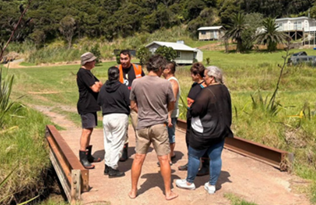
Throughout both events, CDEM has worked closely in partnership with Ngātiwai, supporting an iwi led, community centred response. This partnership has enabled marae-based support, coordinated welfare delivery, trusted community engagement, and effective information sharing, strengthening both immediate response actions and early recovery planning.
This event is ongoing at the time of drafting this report and is expected to continue for several weeks following the transition to recovery.
4.6.2 PROTECTED AND FLOURISHING NATIVE LIFE
Biosecurity summer awareness campaigns
The Community Engagement team delivered marketing and promotional support for biosecurity messaging on exotic Caulerpa and invasive freshwater clam. Paid digital advertising running until early February 2026 targets visitors before they arrive in the region and local audiences based on location and behaviour.
Predator Free Whangārei project – Kauri Mountain
The Predator Free team, supported by the Te Tiriti Partnerships team hosted a visit to the Kauri Mountain project area by Green Party MP Celia Wade-Brown, accompanied by regional councillors and Mana Whenua representatives.
The visit provided an opportunity to showcase project progress and discuss future priorities. The Te Tiriti Partnerships team worked alongside biosecurity staff and mana whenua to support tikanga and ensure partnership‑based delivery.
|
|
|
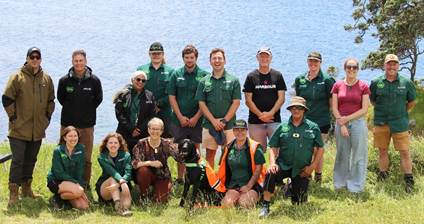
MP Celia Wade-Brown (Green Party), NRC councillors Hunt, Macdonald and Morunga and staff. |
PEST PLANTS
Spartina Programme
Survey and control for the spartina programme commenced in December, working on days with suitable tides when wind and weather conditions allow. In the mid-north programme, all Whangaroa spartina sites were inspected & controlled, with good results evident from last season’s control. The site in Mangonui was also inspected and has responded well to last year’s treatment. The known Taipa sites were again found to have no active growth. However, a new large site was found during extended surveillance. In the Hokianga, the Motuti, Motukiore, Kohukohu, Horeke & Umawera spartina sites were searched and controlled, with another large patch found at Umawera during extended searches in late January.
Further consultation is still required before control work can be progressed in the Parengarenga and Rangaunu harbours.
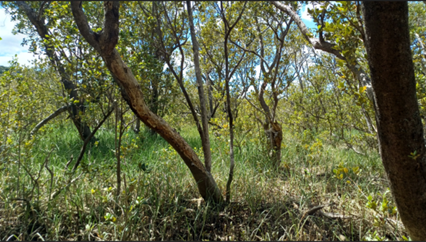
New spartina site found under mangroves in the Umawera area
In the Kaipara Harbour programme, staff are again working alongside kaimahi from Te Uri O Hau. This additional local capacity has been extremely beneficial for the programme, supporting both more efficient control during the narrow tide windows, and enabling further extended search for new sites. Six new sites have been added through this surveillance work. Kaimahi from Te Uri O Hau and other iwi are also being supported to obtain the ‘Aquatic Strand’ certification, which will enable them to undertake some aquatic weed control work independently.
Exotic Caulerpa Assessment Update – Dec 2025-Jan 2026
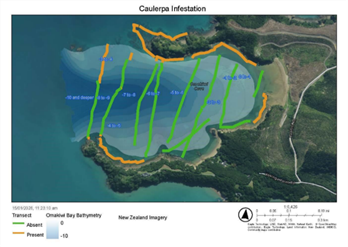
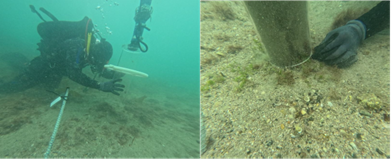
The Northland Regional Council Marine Biosecurity team conducted a two‑day diving assessment in Omakiwi Cove to quantify exotic Caulerpa biomass and distribution within the consented dredge area (Figure 1).
Across 6.9 km of diver transects, surveys spanned depths of 0.5–10 m under highly variable visibility (0.2–5 m). Most exotic Caulerpa was detected within 0.5–3 m depth around the bay’s periphery, typically attached to rocky reef, shell hash, and sandy substrates, with all observed finds appearing healthy. A single unattached 20×20 cm patch and an isolated blade were detected at 8m in the sandy‑mud centre of the bay.
|
|
Figure 1 - Transects conducted by NRC biosecurity team on 13-14 January 2026. Green transects show absence and orange indicates presence of exotic Caulerpa. |
|
|
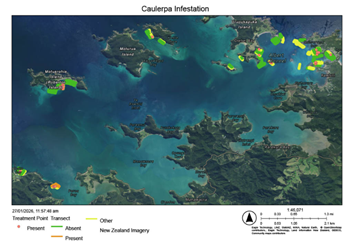
Figure 2-location of CCCT dive surveys in the outer Bay of Islands. Dive surveys were conducted between 13 December 2025 and 8 January 2026 |
The central bay’s soft sediments produced extreme turbidity, reducing search efficiency and likely limiting full detectability of biomass. Periphery habitats showed improved conditions, especially around the NW point, where visibility increased and native biodiversity, including extensive Caulerpa flexilis beds, was notable. Overall, exotic Caulerpa remains established around Omakiwi Cove’s shallow margins, with dispersed low‑density in deeper area. Survey conditions constrained detectability in central areas, and results should be interpreted with caution.
In addition to the NRC survey in Omakiwi, Northern Divers contracted by Conquer Caulerpa Charitable Trust (CCCT) conducted surveillance in the wider Rāwhiti Controlled Area Notice (CAN) area between 13 Dec 2025 and 17 Jan 2026 (Figure 2).
Divers mapped 96 km of seafloor across 110 transects and identified 120 exotic Caulerpa patches (average cover 57%), with 37 sites undergoing chlorine‑and‑mat treatment or removal via handheld suction dredge (Figure 3). Across this wider dataset, sandy habitats dominated detections, with reef comprising approximately 20% of the surveyed area.
|
|
|
Figure 3 -Northern Divers conducting handheld suction dredge activities in the Rāwhiti CAN area between 13 Dec 2025 and 17 Jan 2026 |
In summary, exotic Caulerpa remains well‑established along the shallow margins of Omakiwi Cove, with indications of renewed growth across the wider Rāwhiti CAN area. Ongoing dive surveillance is planned for both locations over the coming months, which coincides with peak seasonal growth driven by warmer and clearer water conditions.
Submersible Planer
The underwater Caulerpa harvester, or Submersible Dredge Planer (SDP), is currently under construction, with key components sourced from Scotland expected to arrive in mid‑February. The hydraulic pumps that will power the SDP have been procured from Australia, and their delivery is timed to coincide with the arrival of the main subsea planer components from Scotland. Testing of the SDP’s underwater performance at Omakiwi is scheduled to begin in May.
Biodiversity
Ōtaika Stream Community Site Meeting - (Mountains to Sea, DOC, NRC, landowners and kaitiaki). Meeting to support the community to develop a plan to restore the īnanga spawning benches along the Ōtaika and Puwera streams. An NRC Biodiversity Advisor and Land Management staff attended offering advice and identifying restoration areas NRC can support their future mahi. Mountains to Sea writing up a plan from this meeting.
Australasian Bittern (Threatened – Nationally Critical) acoustic surveys and data analysis completed for five Kaipara lake wetland sites. No bittern detected.
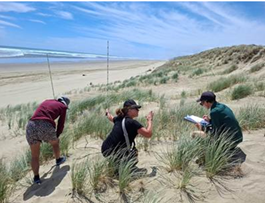
Coastcare and Resource science staff have been busy over the summer monitoring our dune sites around the region.
Over the last two months, three CoastCare advocacy events have been held:
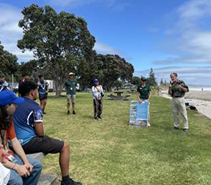
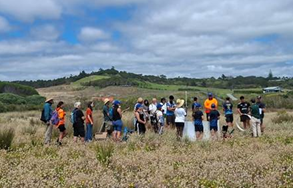
· Bream Bay Restore and Explore event including: Climate Action and Natural Hazards, Communications and Education Teams; Patuharakeke Te Pou Taiao and local Coastcare groups.
· Glinks Gully Dunes Day with Ginks Gully Protection Society and residents
· Ngunguru dunes event with Tūtūkākā Landcare Coalition.
In addition, Coastcare staff attended several Coastcare group working bees and Whangarei District Council’s vehicles on beaches advocacy event at Ruakākā.
|
|
|
|
Photos above: Two of the sites visited during the Bream Bay Explore and Restore event |
|
|
|
|
|
Photo above: Dune Monitoring at Glinks Gully with local residents |
Photo above: Tūtūkākā Dunes Event |
Compliance Monitoring
The results of compliance monitoring for the period 1 December 2025 to 31 January 2026 (and year-to- date figures) are summarised in the following table and discussed below.
|
Classification |
Total |
Full compliance |
Low risk non-compliance |
Moderate non-compliance |
Significant non-compliance |
|
Air Discharge |
33 |
31 |
1 |
1 |
0 |
|
Bore Consent |
13 |
10 |
3 |
0 |
0 |
|
Coastal Discharge |
21 |
14 |
1 |
6 |
0 |
|
Coastal Permit |
10 |
10 |
0 |
0 |
0 |
|
FDE - Discharge permit |
3 |
3 |
0 |
0 |
0 |
|
FDE – Permitted activity |
5 |
4 |
0 |
0 |
1 |
|
Land Discharge |
62 |
47 |
10 |
4 |
1 |
|
Land Use Consent |
59 |
47 |
6 |
5 |
1 |
|
NES-F |
0 |
0 |
0 |
0 |
0 |
|
Water Discharge |
78 |
47 |
9 |
22 |
0 |
|
Water Permit |
4 |
3 |
1 |
0 |
0 |
|
Water Take |
176 |
131 |
37 |
8 |
0 |
|
Total |
464 |
347 |
68 |
46 |
3 |
|
Percentage |
|
74.8% |
14.7% |
9.9% |
0.6% |
|
Year to date |
3291 |
2487 |
355 |
378 |
71 |
|
Percentage |
|
75.6% |
10.8% |
11.5% |
2.1% |
Municipal wastewater treatment plant compliance/enforcement
|
WWTP/Consent Status |
Compliance for last 12 months |
Compliance for last 3 months |
Enforcement Action/Response |
|||
|
Kaiwaka Expires 2049 |
|
|
Under AN (issued in August 2025) Moderate non-compliance for wetland overflowing and short circuiting. Most recent results compliant. |
|||
|
Hikurangi Expired June 2025 (replacement consent application being processed) |
|
|
Under AN TSS, BOD5 and E. coli results above RC limits for 90th percentile. Results are showing improvement following recent upgrades. |
|||
|
Paihia Expires 2034 |
|
|
Under AN Moderate non-compliances due to ammoniacal nitrogen exceeding RC limits for 90th percentile. Some results missing and meter not working.
|
|||
|
Opononi & Omāpere Expires 2027
|
|
|
Under ANs Moderate non-compliances for BOD, ammoniacal nitrogen, E. coli, and TSS. Remedial actions and plant maintenance recently undertaken. Further monitoring required to determine effectiveness. |
|||
|
Rāwene Expired 2023 (replacement consent being processed) |
|
|
TSS exceeding 90th percentile consent limits. Remedial work scheduled. |
|||
|
Whatuwhiwhi Expires November 2025 (replacement consent application being processed) |
|
|
Moderate non-compliances for TSS exceeding RC limits. Self-monitoring not being undertaken in accordance with consent requirements. CH exploring options for plant upgrade alongside consent renewal. |
|||
|
Taipā Expires 2029 |
|
|
Moderate non-compliances for FC exceeding 85th percentile and TN exceeding RC limits. Working group trialling options to improve treatment and working towards a land-based discharge by 2027. |
|||
|
Kohukohu Expires 2026 |
|
|
Under AN Self-monitoring not being undertaken correctly. FC and ammoniacal nitrogen exceed consent limits. Discharge volumes have also exceeded RC limits on some occasions. |
|||
|
Hihi Expired 2022 (replacement consent being processed) |
|
|
Ammoniacal nitrogen and E. coli exceeding RC limits. Some self- monitoring results missing. |
|||
|
Ahipara Expires 2033 |
|
|
Under ANs (reissued in September 2022). One-off exceedance of FC limits. |
|||
|
Russell Expired 30 April 2024 (replacement consent being processed) |
|
|
Under AN Reporting requirements outstanding and volume of leachate discharged to plant exceeded consent limits. CH investigating leachate rates and mitigation strategies. |
|||
|
Kaitāia Expired 2021 (decision on replacement consent due soon) |
|
|
Under AN (for reticulation overflows). Ongoing works on reticulation system. Some sample results missing. RC limits exceeded for percentiles. |
|||
|
Kawakawa Expires 2036 |
|
|
E. coli spikes on two occasions have caused exceedance in percentile limits. Cause of spikes fixed and E. coli levels have returned to normal. BOD and TSS have exceeded 90th percentile limits. |
|||
|
Kaikohe Expired 2021 (replacement consent being processed but also listed Fast-track proposal) |
|
|
Under AN Self-monitoring data missing or not reported correctly. E. coli exceeded median limit. |
|||
|
Ruakaka Expires 2046 |
|
|
Elevated ammoniacal nitrogen levels in two bores. Investigations showed that no elevated levels were found in the receiving environment. |
|||
|
Tutukaka Expires 2054 |
|
|
None currently. |
|||
|
Ngunguru Expires 2035 |
|
|
None currently.
|
|||
|
Te Kopuru Expires 2044 |
|
|
Low risk non-compliance for discharge flow meter not working. |
|||
|
Whāngārei City Expires 2045 |
|
|
Under AN for odour from plant. Additional odour controls being implemented.
BOD5 and TSS exceeding median limits.
Reticulation issues relating to the Whangarei Heads line and pump stations are being managed. Investigations for long-term remediation are underway. Further information is available from WDC website. |
|||
|
Kaeo Expired 2022 (replacement consent being processed) |
|
|
None currently. |
|||
|
Rangiputa Expires 2032 |
|
|
None currently. |
|||
|
Dargaville Expires 2043 |
|
|
Under ANs Required report received late. |
|||
|
Maungaturoto Expires 2032 |
|
|
Under AN; IN issued September 2024 No issues currently. |
|||
|
Kerikeri Expires 2036 |
|
|
Some test results missing. |
|||
|
Oakura Expires 2025 |
|
|
None currently.
|
|||
|
Mangawhai Expires 2042 |
|
|
Under ANs Enforcement relates to odour. None currently. |
|||
|
Waipū Expires 2030 |
|
|
None currently. |
|||
|
Glinks Gully Expires 2034 |
|
|
None currently. |
|||
|
Portland Expires 2054 |
|
|
None currently.
|
|||
|
Waiōtira Expires 2030 |
|
|
None currently. |
|||
|
Compliance Status |
|
|
||||
|
Full compliance |
|
|
||||
|
Low risk non-compliance |
|
|
||||
|
Moderate non-compliance |
|
|
||||
|
Significant non-compliance |
|
|
||||
Farm dairy effluent (FDE) monitoring
FDE inspections commenced in August 2025. A total of 679 farms were monitored this season (228 permitted activities and 451 consented farms). Farm numbers continue to decline by a few farms each year. Comparisons of this season’s results with last season are given in the tables below. Overall, compliance is similar between last year and this year. The most notable trend this year is that more farms are choosing to operate under the permitted activity status. This has been driven by Fonterra’s promotion of “nil discharge of effluent to water”. Providing farmers manage their effluent irrigation systems well, this should result in positive outcomes for water quality.
Consented farms
|
Full Compliance |
Moderate Non-Compliance |
Significant Non-Compliance |
|||
|
This Year |
Last Year |
This Year |
Last Year |
This Year |
Last Year |
|
298 |
348 |
110 |
135 |
43 |
37 |
|
66% |
67% |
24% |
26% |
10% |
7% |
Non-consented farms
|
Full Compliance |
Moderate Non-Compliance |
Significant Non-Compliance |
|||
|
This Year |
Last Year |
This Year |
Last Year |
This Year |
Last Year |
|
174 |
133 |
34 |
26 |
20 |
12 |
|
76% |
78% |
15% |
15% |
9% |
7% |
Court Cases Update
|
Litigation |
Next Court Event/Action |
|
Enforcement Order and Prosecution Environment Court Earthworks and vegetation removal in a wetland
|
NRC approved the Remediation and Mitigation Plan which was a requirement of the Enforcement Orders (issued on 20 January 2025). Some requirements of the Enforcement Orders have not been met by the defendant. Charges for prosecution served on defendants on 25 July 2025. Outcome of the pre-trial hearing held on 1 December 2025 found the defendants are eligible for jury trial. Awaiting further direction from the court. |
|
Interim Enforcement Orders Environment Court Discharge to air from the manufacturing of Asphalt and open burning |
On 23 June 2025, the parties filed and served a joint memorandum advising that the respondents plan to dismantle and remove the asphalt plant from the site permanently and are no longer pursuing a resource consent for bitumen batching activities on the site. The respondents requested additional time to complete the dismantling process. The matter was accordingly adjourned until 23 January 2026. A joint memorandum was filed. Parties agreed to leave the undertaking in place until either a consent for the plant operation is granted or the plant is dismantled. |
|
Interim Enforcement Orders Environment Court Discharge to air from open burning |
Orders sought (ex parte) on 16 December 2025 seeking the respondents to cease the burning of noxious waste and smoky materials at the Second Respondent's property in Kaeo. Orders granted on 18 December 2025. |
|
Abatement notice appeal |
Three parties issued abatement notices in November 2025 appealed the notices. A joint memorandum was filed in court on 30 January 2026. The memo advised the Court that the parties have been engaging in constructive resolution discussions and the matter was expected to be resolved without the need for Court intervention. The memo sought an extension until 5 February to enable the discussions to progress |
|
Interim Injunction (Civil Matter) Māori Land Court Encroachment and damage of Māori land |
The Māori Land Court requested the NRC, as a Third Party, to attend the hearing for an application for an interim injunction by a person regarding alleged encroachment and damage of Māori land by their neighbour’s earthworks. The Group Manager Regulatory Service prepared an affidavit for and attended the hearing on 31 October 2025. The substantial hearing of the matter was deferred to next year (hearing date awaited), but the presiding judge granted an interim injunction restricting the neighbour’s earthworks in the vicinity of the contested land boundary. |
4.6.3 HEALTHY WATERS, LAND AND AIR
|
Department |
Description |
Status |
|
Consent decision appeal |
New groundwater take at Tautoro (south of Kaikohe) for irrigation of a proposed avocado orchard |
One appeal was received from Te Riingi Marae. Environment Court assisted mediation was held on 21 October 2025. A mediation agreement was signed which has several tasks for parties to complete by agreed deadlines, with an update to the Court on progress being required 28 November 2025. The parties advised the Court that progress towards resolving the appeal is still ongoing and requested an extension to continue discussions. The Court approved an extension until 30 March 2026 when parties are to file and serve a further reporting memorandum. |
Consents Update
|
December 2025 (105) |
January 2026 (68) |
||
|
Ÿ Moorings |
1 |
Ÿ Moorings |
|
|
Ÿ Coastal Permits |
13 |
Ÿ Coastal Permits |
15 |
|
Ÿ Air Discharge Permits |
0 |
Ÿ Air Discharge Permits |
1 |
|
Ÿ Land Discharge Permits |
23 |
Ÿ Land Discharge Permits |
10 |
|
Ÿ Water Discharge Permits |
10 |
Ÿ Water Discharge Permits |
|
|
Ÿ Land Use Consents |
42 |
Ÿ Land Use Consents |
24 |
|
Ÿ Water Takes |
10 |
Ÿ Water Takes |
3 |
|
Ÿ Bore Consents |
6 |
Ÿ Bore Consents |
15 |
Of the 111 applications in progress at the end of January 2026:
Ÿ 29 were received more than 12 months ago;
Ÿ 23 were received between 6 and 12 months ago (most awaiting further information from the applicant);
Ÿ 59 less than 6 months.
Appointment of Hearing Commissioners
§ No commissioners were appointed in December 2025 and January 2026.
Consents Decisions and Progress on Notified Applications in Process, Objections and Appeals
The current level of notified application processing activities at the end of January 2026 is (by number):
|
Ÿ Applications Publicly/Limited Notified During Previous Month |
1 |
|
Ÿ Progress on Applications Previously Notified |
0 |
|
Ÿ Hearings and Decisions |
0 |
|
Ÿ Appeals/Objections |
1 |
Kaipara Moana Remediation: Key Performance Indicators
As at 31 December 2025, almost 4 years into full operations, KMR has delivered the following results on the ground:
Nature & Resilience
· 2.9 million plants in the ground or contracted to plant
· 1,801 hectares planted or contracted, or regenerating into native forest
· 1,123 km of fencing completed or contracted – the same distance as from Cape Rēinga to Cape Palliser
· Over 151,800 hectares managed under KMR plans
Jobs & Skills
· Over $30 million invested in restoration projects
· 53 local businesses and nurseries accredited to supply KMR
· Over 447,000 hours of new work created – a year’s work for over 287 people (*end December)
· 262 people trained and mentored, many from local iwi/hapū, to advise on project design and delivery (*end December)
(*Data collated at each quarter end)
Participation
· 1,418 landowners have expressed interest in KMR
· 937 plans have been completed with landowners
· 119 more plans are in development
· 133 group-led projects led by hapū, marae, community groups, catchment groups and other collectives.
Impact monitoring and reporting
The information shown above reflects the formal KMR Key Performance Indicators, as required under the Deed of Funding with the Crown. We will continue to report monthly on these indicators, which are common across all Jobs for Nature investments.
As these indicators are largely activity and output metrics, KMR has continued to advance the articulation of impact beyond KPI reporting.
A new initiative started in July 2025 has been the production of bi-annual detailed spatial analysis of the total areas protected by KMR projects. Results show that between July 2025 and end of December 2025, KMR protected areas have increased by 19%, as fencing, planting, retirement/regeneration and afforestation projects have been signed off and added into the spatial data. This form of analysis demonstrates how seemingly minor projects can produce non-linear gains and amplify small actions into larger protected footprints. For example, small, strategic fencing additions can exclude stock from much larger adjacent areas, often leveraging existing landowner investment.
Outcomes monitoring and reporting
The highly successful open day collaborations with KMR accredited nurseries last spring are planned again for 7 nurseries in February to promote planting for winter 2026. With a range of Field Day events across Northland and Auckland on the horizon, KMR Field Advisors will be in-person at many community events in the coming months connecting with the public.
KMR is also pleased to be included in the MPI/ NZ Landcare Trust initiative to explore the potential for one or more Catchment Collectives to be established in Northland/Te Tai Tokerau. We anticipate NZ Landcare Trust coordinating the first meeting of relevant parties during February /March, where existing catchment groups will be able to share thoughts and ideas on the proposal. This presents a new opportunity for KMR to hear from others in the community and share our story around operations and governance.
Resource Management Act
Ten national direction instruments under the RMA took effect on 15 January 2026 (approved Dec 2025, gazetted 18 Dec). They provide immediate direction under the RMA while transitioning to the new planning system (Planning and Natural Environment Bills).
The table below outlies the instrument, type and focus.
|
Instrument |
Type |
Focus |
|
NES- Detached Minor Residential Units (DMRU) |
New |
Housing flexibility |
|
NPS-Natural Hazards |
New |
Risk-based hazard management |
|
NPS-Infrastructure |
New |
Enable nationally significant infrastructure |
|
NPS-Highly Productive Land |
Amendment |
Protect HPL and provide for quarrying and mining |
|
NZ Coastal Policy Statement |
Amendment |
Enable infrastructure, aquaculture and resource extraction |
|
NPS-Indigenous Biodiversity |
Amendment |
Provide for quarrying and mining activities |
|
NPS-Freshwater Management |
Amendment |
Provide for quarrying and mining activities |
|
NES-Freshwater |
Amendment |
Provide for quarrying and mining activities |
|
NPS-Renewable Electricity Generation |
Amendment |
Provide a more directive and enabling consenting environment |
|
NPS-Electricity Networks |
Amendment |
To enable transmission and distribution networks |
Key Implications are:
· The new and amended NPS/NES apply for all consent decisions from 15 January 2026.
· Mapping for Highly Productive Land is deferred to December 2027.
· Shift to a risk-based hazard approach, consider functional/operational needs of infrastructure and benefits of mining and quarrying in planning and consent decisions.
· Enabling of renewable energy and electricity networks.
Tranche 2 updates expected later in 2026
District Planning
NRC is a party to a number of Environment Court appeals on Plan Change 1 (PC1) to the Whangarei District Plan. PC1 introduced provisions (and associated maps) relating to the management of natural hazards. Staff (under delegations) have been in discussions with appeal parties and WDC as respondent. To date one appeal point by Foodstuffs Ltd relating to flood hazard mapping on the New World Regent site has been resolved by Court Consent Order issued in December 2025. The Consent Order removes flood hazard demarcation on the site from district planning maps and creates a new precinct on the northern portion of the site that provides for low-risk structures associated with existing uses such as car parking canopies, EV charging stations, trolley bays, and other structures without walls designed to avoid obstructing or diverting floodwaters. The Consent Order clarifies that natural hazard provisions of the district plan apply to any activity that does not meet the permitted activity rules in the precinct and that the precinct is treated as a 1-in-10 year flood hazard area in these instances, which achieves the same outcome as the flood demarcation.
Land Management – Environmental Fund FY2025/26
The Environment Fund has been allocated for the 2025/26 financial year. $410,900 was allocated across 25 projects focusing on stock exclusion from top 150 wetlands and waterways. Funded actions include fencing and a one-off grant for reticulated water systems (Tank and trough) to enable stock exclusion.
Heavy metals report
A report on the monitoring of heavy metals in seabed sediments was recently published. Heavy metals in marine sediments are monitored as part of our state of the environment programme and by compliance checks on consented activities, such as discharges to the coastal marine area that can contribute to contamination. The report also delivers trends and changes over time and describes spatial patterns of contamination.
The data in the report demonstrates that:
· Overall metal contamination in Northland is low, but higher levels of contamination is associated with urban areas and consented activities such as boat maintenance facilities, marinas, and stormwater discharges.
· The highest metal concentrations were found in tidal creek environments close to urban areas and freshwater inputs in the Hātea River, Kerikeri Inlet and Kaipara Harbour.
· Concentrations of lead in marine sediment have been decreasing, which is likely due to restrictions on the use of lead in paints and as a fuel additive, demonstrating how well implemented and enforced regulations can have positive environmental outcomes.
· In contrast increasing metal concentrations were found at Limeburners Creek, in the Hātea River, which is of concern, and points to a degradation in sediment quality at this location.
The full report can be read on our website here.
Student action against invasive goldfish
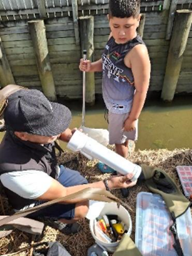
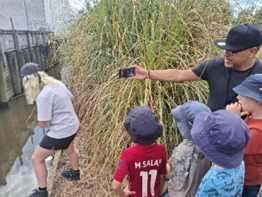
An Enviroschools project at a Morningside Primary School began after students identified invasive goldfish in their local awa during a clean‑up activity. NRC’s education and biosecurity teams are supporting students to monitor the waterway using cameras and basic ecological surveys to inform future pest‑fish management. The project is building environmental skills including measuring tides and water levels, mapping the stream, testing water quality and identifying both invasive species and native wildlife, with planned habitat restoration and invasive species removal continuing later this year.
The project is empowering tamariki to move from learning about environmental care to actively leading it in their community.
|
The Morningside School awa project shows what’s possible when schools and NRC work side by side. |
|
|
Hills to Harbour e-newsletter
The Community Engagement team supported the Land team with the production, design, and distribution of the Hills To Harbour panui.
Safe Swim campaign
The Community Engagement team supported the Science and Natural Resources team with the delivery of a campaign promoting Safeswim.
4.6.4 SAFE AND RESILIENT TRANSPORT NETWORKS
Maritime
There were 37 incidents in total recorded over December 2025 and January 2026 including vessel accidents, groundings and sinkings with some mooring and AtoN issues. A vessel sank at one Tree point on Christmas day causing issues with weather, and lack of available divers and boatyards open. Another vessel hit a reef off Whangaruru and ended up on Sandy Bay upside down in peak season. Communication with the owner, insurers and available contractors was an initial issue. Another vessel sailed onto Brampton reef and was luckily removed with the help of the maritime team and a contractor tug before it was destroyed.
There were 30 maritime safety patrols carried out in Mangawhai, Whangārei, Tutakaka, Ngunguru, Whangaruru, Kaipara and Kai Iwi Lakes, Kaipara, Hokianga, Bay of Islands and Whangaroa.
The Christmas period was marked with unsettled weather, which deterred boating and the number of vessels arriving from Auckland. Overall behaviour was good, with some education on the need for lifejackets still prevailing. Large launch wakes were also an issue.
The review report for the Harbour safety management systems was received (the review was undertaken in August). All systems were found compliant with the code and functional. The harbour safety group stakeholders will review the report and consider the recommendations . The next review will be in approximately 4 years’ time. Annual internal reviews are carried out in the interim.
A discussion paper was released by Maritime NZ on harbourmaster powers and regional council maritime responsibilities. A reply was sent in December, and a meeting is scheduled in February with a small group of CEOs, harbourmasters and Maritime NZ. The continued environmental protection of regional waters is important, and the CEOs are supporting the harbourmasters well in the discussions.
Seven Cruise ships and three superyachts visited the Bay of Islands in December, and seven cruise ships in January, with one cancellation due to being unable to arrive on time. A number of the maritime team took the opportunity to take leave over Christmas for the first time due to the reduced shipping this year.
The Community Engagement team produced and published a safety video for boaties on Whangārei Harbour in collaboration with NorthTugz. The video achieved more than 9,500 views and 95 engagements on social media. Additional promotion included advertising on digital screens at Bank Street and New World Regent, with the Bank Street screen generating an estimated 77,600 daily impressions.
Transport
Draft Regional Land Transport Strategy
Provisional work has commenced on the Draft Regional Land Transport Plan 2027/2033 (RLTP). A paper will be tabled at the 10 February 2026 Regional Transport Committee detailing the porocess to be following in the compilation, consultation and implementation of the RLTP.
No formal national timetable has been released at this time. Once received staff will formalise theirs and present it to the relevant RTC meeting.
Transport campaigns and promotion
The Community Engagement team provided marketing and promotional support for two key transport initiatives: public communications for the Free Bus Day on 21 December across all CityLink and Far North Link services, and a full online/offline campaign for the Summer Beach Bus Service operating over the summer between Rose Street and Ruakākā Beach. CityLink’s social media channels were used to drive engagement.
Bus operations
A&P Show - free buses - Saturday 5 December
NRC staff in conjunction with CityLink worked with the A&P Show
organisers to run a promotion where all CityLink buses were free for the day.
This included a dedicated show bus that transported people directly to the
event. A total of 97 passengers used the show bus, and overall CityLink
carried 550 passengers for the day. This represents an increase compared with a
typical Saturday for CityLink when the show is not running. The aim of
the promotion was to encourage people to use public transport and help reduce
congestion.
BusLink Services free - Friday
19th December
On Friday 19 December 2025, all BusLink services across Northland offered
free travel for the day as a Christmas gesture of gratitude from the NRC to
their regular patrons and to encourage people to use public transport.
Passenger numbers were increased compared with a typical day.
Beach buses – Thursday
8th January
The launch of the Beach Buses was delayed this year due to unpredictable
weather. Instead of beginning in December, the first day of service was
Thursday 8 January, with seven passengers recorded. The Beach Buses run once a
week to Ruakākā on Thursdays, using the Bream Bay Link vehicle during
its break to achieve cost savings. Services will continue until Thursday
5 February.
Total Mobility
Changes to Total Mobility
subsidy levels
On Tuesday 16 December, the Ministry of Transport advised that a government
announcement regarding Total Mobility Scheme funding assistance levels was
iminent. The government’s announcement confirmed that the subsidy rate
per trip will reduce from 75% to 65%, with a further 10% reduction to capped
fares. These changes take effect from 1 July 2026.
A meeting with NZTA is scheduled for Thursday 29 January to discuss the changes. Further updates to the scheme are expected, and a follow‑up meeting with the Ministry of Transport is planned for Thursday 12 February to gather feedback from all Total Mobility coordinators.
The Community Engagement team provided marketing and promotional support for two key transport initiatives: public communications for the Free Bus Day on 21 December across all CityLink and Far North Link services, and a full online/offline campaign for the Summer Beach Bus Service operating over the summer between Rose Street and Ruakākā Beach. CityLink’s social media channels were used to drive engagement.
4.6.5 A SUSTAINABLE, INNOVATIVE AND EQUITABLE ECONOMY
Climate
On 3 December 2025, staff supported an Energy Efficiency and Conservation Authority (EECA) hosted workshop in Whangārei for small and medium-sized businesses connected to the reticulated gas network. Approximately 30 people attended. The workshop highlighted the national picture of declining gas supply, rising prices, and increasing difficulty for some users to secure long-term contracts, creating growing risk and uncertainty around future energy costs and reliability.
In Northland, this risk is amplified by the fact that the two Fonterra dairy sites consume around 96% of the natural gas supplied through the network (which extends as far north as Kauri). When these major users transition away from gas to improve energy security, reduce costs, and meet emissions reduction targets, the ongoing cost of maintaining the network is likely to fall on the remaining users, who collectively account for just 4% of demand. This could make continued connection to the gas network increasingly uneconomic and pose a significant risk for local businesses.
The key message for workshop participants was that gas is unlikely to disappear overnight, but its future affordability is uncertain. The issue is not an immediate loss of supply, but the growing cost risk and the point at which switching to alternative energy sources becomes the more resilient and cost-effective option for businesses in Taitokerau.
EECA, with support from Northland Regional Council and Northland Inc, will continue to support businesses as they assess their options and plan for this transition. A positive outcome from the workshop was connecting Sport Northland with EECA to explore energy options for the aquatic centre upgrade, which currently relies on natural gas.
Natural Hazards
In December 2025 MfE released the National Policy Statement for Natural Hazards 2025 which provides direction under the Resource Management Act 1991 for managing natural hazard risk associated with subdivision, use and development. The National Policy Statement requires decision-makers to assess risk using a risk matrix and manage it proportionately. Very high risk must be avoided, and other risks managed through mitigation measures. Decisions must be based on the best available information, even where that information is uncertain or incomplete. This National Policy Statement does not apply to infrastructure (as defined in the Act) or primary production (as defined in the National Planning Standards). Where councils already have more stringent provisions in place, these should be followed.
We are still understanding the impact of this standard on our work and how it might interact with the proposed amendments to the RMA. The implementation of the standard will fall to district councils when making decisions about subdivisions. Much of the information district councils need has been created and held by NRC and we need to ensure it is accessible to the district councils and meets their needs under this policy statement.
This National Policy Statement signals the importance of natural hazard risk data across a range of hazards and supports the ongoing programme of work that NRC doing.
In October Earth Sciences New Zealand released the first national flood hazard model for Aotearoa along with a Public Flood hazard Viewer. In a separate project the Ministry for the Environment (MfE) are developing a national flood map which aims to integrate all flood modelling across New Zealand. NRC have been working to provide MfE with detailed information on our flood models that will allow them to identify ways in which this national flood map can be developed.
The Whangārei Urban Flood Strategy is progressing, though some additional work around the stormwater network and flood modelling have been identified to enable to project to move forward. This work will be completed within the existing budget. A Technical Advisory Group has been established, and the BECCA lead consortium has begun to socialise possible options and combinations for future work.
Te Uru Kahika (TUK) Climate Group strategic positioning advice paper
Staff are helping to prepare advice to Regional Council CEs on effective adaptation planning under new (adaptation-RM-LG) system. It will highlight challenges in reconciling local adaptation planning and catchment-based planning, and options to address them in the new (adaptation-RM-LG) system.
The relationship between local adaptation planning and regional sector functions—particularly those focused on the natural environment—remains unclear. Effective adaptation responses must be developed within the context of key environmental processes, ensuring that upstream and downstream influences and impacts are fully considered and provided for.
Te Hōtaka Urutau Hapori - FNDC Community Adaptation Planning Stage one underway
Stage One Community Adaptation Planning in Hokianga, Whangapaē, Herekino and Waimamaku areas is underway. Staff are supporting this project with membership on the project team. The project team is the core group that will guide and deliver the project.
Stage One (Dec-April 2026): Stocktake & scoping - build relationships and discovery, confirm scope of technical assessments to reflect the needs of each community. These will be confirmed in the Scoping Report.
· Stage Two (March – May 2026): Establishment and frameworks – set up necessary systems and agreements
· Stage Three (May-Oct 2026): What is happening and what matters most – centred around Wānanga ‘design week 1’
· Stage Four (Oct – March 2027): What can we do? – centred around Wānanga ‘design week 2’
· Stage Five (March 2027 – August 2027: How will we do it? – Share draft adaptation plans with the community
Here is the promotional video where Kahika Moko is explaining the importance of the adaption planning project https://youtu.be/SHO3hQCiWZY
Te ao hurihuri – educator workshop for a climate-conscious future
The Education, Climate Action and Te Tiriti Partnerships teams co‑hosted Te ao hurihuri, a climate education workshop in Kerikeri attended by 29 educators from across Te Taitokerau. Participants represented early childhood centres, primary and secondary schools, and environmental education organisations, collectively reaching nearly 5,000 young people.
The workshop focused on practical approaches to climate learning, with sessions covering climate science, mātauranga Māori, the Climate Change Learning Programme, Climate Club Aotearoa’s Ripple workshop, Earth Science’s “Serious Games”, and virtual reality experiences from Blake NZ‑VR. Educators left with strengthened connections and practical tools to embed climate learning in classrooms, supporting tamariki and taiohi to lead climate action in their communities.
|
|
|
Regional Economic Development
An induction session of the new triennium Joint Regional Economic Development Committee (JREDC) was held on Friday 12 December. The session covered the roles and responsibilities of JREDC as shareholders of Northland Inc and allocators of funding from the Investment and Growth Reserve (IGR), and provided an opportunity for the new JREDC to meet the Northland Inc board and senior staff. Following this, an Extraordinary JREDC meeting was held on 22 December to elect a Chair and Deputy Chair. NRC Cr Geoff Crawford was elected Chair and KDC Deputy Mayor Gordon Lambeth was elected Deputy Chair. A workshop of the JREDC was held on 30 January to help the four Northland councils align economic development messages ahead of the Waitangi Day commemorations and to discuss the key projects that JREDC should focus on in 2026.
The Northland Infrastructure Plan continues to be developed by Beca in consultation with a project team involving staff from all four councils. Work in December included a presentation at Northland Forward Together Strategic Planning Workshop on 16 December. The draft will be provided to the first meeting of JREDC on 6 March 2026.
Staff attended a session hosted by Whangarei District Council with the Indian Consul General Dr Sethi on 23 January. The informal session discussed the opportunities New Zealand–India Free Trade Agreement for regional exporters and businesses recently
Economic Development Funding
Through its engagement with Te Tai Tokerau Water Trust, council has invested into the Kaipara Water Company and Mid North Water Company. Staff and Northland Inc are working closely with TTTWT to develop actions such as field trials and economic data that would support the private sector uptake of shares in the Kaipara Water Company. A meeting was held with representatives from Horticulture NZ and Plant & Food Research, Bioeconomy Science Institute to discuss research and co-funding opportunities.
Economic Information
The latest issue of the Northland Economic Quarterly e-newsletter was released on 10 December 2025. This issue analysed changes in businesses numbers in Northland, provided commentary on the results for the 2024/25 for selected primary sector production, and considered the latest population estimates for the region. Current past issues can be found online at https://www.nrc.govt.nz/your-council/economic-development/economic-quarterly/
Completed the revision of the Environmental Scan 2025, including updating the report with recently released economic and demographic information. The environmental scan enables informed decision-making by providing council with an understanding of the community context, economic characteristics and environmental conditions that shape our region. It helps council to look at the big picture when developing its strategic direction and Long Term Plan (LTP).
Northland Inc
Northland Inc board and senior staff presented to the Northland Forward Together Strategic Planning Workshop on 16 December. The purpose was to ensure that all councillors had an opportunity to meet the board and understand the work programmes of the joint council-controlled organisation.
Updated The Tourism Operator Hub: https://northlandnz.com/northland-inc/what-we-do/destination-management/tourism-operator-hub/. While this is primarily information for new tourism and hospitality operators, there are links to many resources including the Northland Journeys toolkit, industry data and insight sources, and responsible tourism resources.
Northland Inc are part of two tourism marketing campaigns that have been allocated funding from Round 2 of the Regional Tourism Boost Fund. The first is a $1.2 M national campaign coordinated by Tātaki Auckland Unlimited to encourage visitors from the USA and Canada to discover all corners of New Zealand, and the second is a $600,000 cycling initiative that will encourage more Australian holidaymakers to experience New Zealand’s Great Rides, led by Destination Great Lake Taupō. This follows the November 2025 allocation of $2.5M to a Rotorua-led collective marketing campaign and partnership activity to drive visitation from the Australian market. Northland Inc are working closely with the lead RTOs to ensure the Northland offering is front of mind.
4.6.6 MEANINGFUL PARTNERSHIPS WITH TāNGATA WHENUA
Whangārei Terenga Paraoa: A refuge of manaakitanga
|
Following the recent severe weather affecting Whangārei’s coastal communities, Whangārei Terenga Paraoa Marae was activated as a community refuge, with the Te Tiriti Partnerships and |
|
|
Engagement team working alongside iwi, hapū, Civil Defence Emergency Management, and district council partners. Approximately 100 people accessed the marae for shelter, essential supplies, power, hot water, and wellbeing support. Community volunteers contributed kai, clothing, and other assistance, reflecting strong local manaakitanga and collective resilience. |
|
Whangaroa, Ngāti Kahu Weather Impact: Integrated Partnership Response
Severe weather across Taitokerau caused major disruption in the Whangaroa and Ngāti Kahu areas, requiring a coordinated regional response. The Te Tiriti Partnerships and Engagement team worked alongside affected hapū, community leaders, and kaitiaki to support a coordinated regional response. We helped strengthen connections between marae, iwi, councils, Civil Defence, and regional leadership to ensure clear communication and practical support on the ground.
Key activities included assisting evacuations from vulnerable areas, supporting kaumātua and tamariki, maintaining essential access routes, and coordinating the distribution of food, water, and basic supplies. Our involvement ensured that local priorities and community leadership guided the response.
Many whānau continue to require support as they assess damage and plan their return home. The event highlighted the need for practical climate‑resilience planning, stronger community‑led partnerships, and long‑term investment in sustainable infrastructure.
Overall, the response reinforced that coordinated action and strong local relationships are essential to protecting communities and whenua during major weather events.
|
|
|
|
Integrated Partnership Response in action |
Impact of weather event |
4.6.7 carbon neutral, resilient communities in a changing climate
Rivers
Storm Event of 17 and 21 January 2026:
Flood mitigation work performed well in Te Ngaere, Wainui and Matangirau. The recorded rainfall of 281 mm on the 21 January at Touwai at Weta guage (upper catchment of Matangirau) is the 2nd highest only to January 2011, Cyclone Wilma when many houses in these catchments were flooded.
|
|
|
Matangirau Flood Way active upstream of Wainui Road Bridge |
Awanui: Slip repair work downstream of Quarry Road Bridge has been completed.
Tranche 2 – Lower Whangatane Spillway Setback, landowner negotiations, geotechnical and initial layout underway. Modelling indicates a 500 mm drop in flood level by seting back the stopbank.
|
|
|
Whangatane Spillway Area of overtopping during Aug 2022 flood, 3 houses experienced flooding during Aug 2022. |
|
|
|
Proposed area of stopbank set-back for Tranche 2 – Lower Whangatane Spillway |
Kaeo Stage 2 Flood Infrastructure Project
The contractor commenced work on 5 January, with fence removal, archaeological exploration along the works footprint and some tree removal.
|
|
Kawakawa Deflection Bank Phase 2
Further benching work on the true right-hand bank opposite the deflection bank has been completed and tested during the January 21 event.
|
|
|
Kawakawa Deflection bank –Te Hononga Hundertwasser Park |
Otiria Swale
The asbestos contractor started 5 January, unfortunately additional asbestos was found the last
day at the edge of the suspect area. The team is assessing an alternative alignment that will reduce
the length and reduce the area of contamination without impacting on the level of service.
Mangamuka Marae
The work is approximately 90% completed, work remaining includes re-shaping a small section of the deflection bank and finishing the power harrowing, grass seeding and fencing.
|
|
|
Removing Silt build up from 2 spans of the Iwitaua Bridge, Mangamuka. |
LTP Business Case:
A contractor has been engaged to manage the Awanui, Kerikeri and Tauranga Bay jobs. Dargaville is
currently without a lead, after the previous project lead pulled out because of over-commitment.
The team will be looking to engage a project manager for this job.
Kerikeri Flood Mitigation Options:
The team are scoping modelling options for the Cross-catchment Overflow Mapping, K3A dam and targeted channel improvements.
Tauranga Bay Flood Mitigation:
The team will be looking to award a peer review of the existing design over the next few weeks and
also start re-engaging with the community to confirm community buy-in.
Dargaville Flood Risk Assessment and Options:
The team have met with KDC staff to better understand the Asset Database and information gaps that will be needed for the study. The Rivers Manager is looking at alternative avenues to progress this work to ensure that the business case is developed in time for LTP considerations.
Civil Defence Emergency Management
Operational Activities
In December, the Group Office Emergency Management Specialists continued the elected member induction programme, delivering briefings for KDC elected members.
Separately, the Emergency Manager participated in SIG forums and national leadership meetings and workshops contributing to a combined national CDEM Group draft submission on the Emergency Management Bill. This draft will inform the Northland CDEM Group submission, with the first Northland‑specific version already circulated to stakeholders for feedback.
Group Office staff also maintained strong engagement with regional partners, community groups, and organisations. Engagement with iwi Māori remains a priority, particularly through Marae Preparedness planning and hapū‑level engagement.
In addition, the Group Office is supporting Northland council Chief Executives in reviewing CDEM financial arrangements and operational delivery models. This work follows the recent Northland CDEM Section 17A Review and builds on earlier CE discussions regarding future arrangement settings. These initial steps are helping assess the effectiveness of existing arrangements and prepare councils for anticipated legislative changes.
Capability Development
To support ongoing capability and capacity building, 18 Northland-wide CDEM staff and two NEMA representatives attended the Controller training course. This was the first time in several years that a course has been delivered in Northland and forms part of a region wide approach to strengthening operational leadership and key statutory emergency management roles.
Development of the Common Operating Platform (COP) for the Emergency Coordination Centre (ECC) is underway. Work continues to integrate the required data feeds, noting that some sources will require future capability development. Desktop testing is scheduled for February and an ECC go‑live targeted for March 2026. Once the internal platform is established, the project will shift to building external COP functionality for partner agencies and stakeholders.
Emergency Management Bill
A key focus for Northland CDEM is the Emergency Management Bill, introduced to Parliament in December 2025 as a significant milestone in strengthening Aotearoa New Zealand’s emergency management system. Once enacted, the Bill will replace the Civil Defence Emergency Management Act 2002 and give effect to improvements identified through the Government Inquiry into the North Island Severe Weather Events. Its progression signals substantial change ahead for regional and local emergency management arrangements, making it a critical area of attention for the Northland CDEM Group.
The overall intent is to modernise the legislative framework, clarify responsibilities, and ensure agencies, communities, and infrastructure providers have the tools and standards needed to manage emergencies effectively.
Key System Improvements
· Stronger community and iwi Māori participation in emergency management planning and governance.
· Clearer responsibilities across national, regional, and local levels.
· Higher and enforceable minimum standards for emergency management practice.
· Reduced disruption to essential services during emergencies.
· Enhanced tools and powers to support effective response and recovery.
Notable Changes in the Bill
· Expanded representation (iwi Māori, rural communities, wider community) on Coordinating Executive Groups.
· Mandatory engagement requirements with iwi Māori, disabled people, seniors, and other groups disproportionately affected by emergencies when developing local and national plans.
· New mechanisms to set and enforce standards, including for essential infrastructure providers such as telecommunications and transport networks.
· Updated framework for identifying essential infrastructure providers, ensuring future‑proofing.
· Stronger obligations on infrastructure providers to contribute to sector response plans.
· Greater clarity on individual councils’ responsibilities within their regions and districts.
The legislation is expected to pass in 2026.
4.6.8 efficient, progressive and transparent council systems
Corporate Strategy and governance
Staff have been progressing a number of projects and working to support mahi across the organisation:
· Over 450 projects and programmes have been entered in to 'WayPoint', council's new system that manages projects, programmes, Risk, KPI reporting, and activities. This work has been heavily supported by the Corporate Strategy team who have been working with managers to ensure the data entered can support future planning and prioritisation across the organisation. Risk and KPI reporting is now fully managed in the system, allowing linkages to be created between activities, programmes, projects, reporting, service provision, and risk.
· The governance team have been facilitating the set up and support of committees and forums through the end 2025 and in to this year, including reviews of terms of reference, and the Triennial Agreement. They have also been facilitating a review of sector‑wide LG membership organisations.
· Council’s in-house legal counsel has been in demand, providing comprehensive legal reviews of contracts and offering expert advice on complex matters, including biosecurity incursions, and the Awanui flood management scheme, and working with staff to resolve other matters of litigation.
· Drafting of the zero-percent increase Annual Plan 2026/27 is well underway, aiming for adoption in May this year.
· Preparation of councils User Fees and Charges for 2026/27 ready for a period of consultation is complete, with an aim to adopt this in May this year alongside the Annual Plan 2026/27.
· Significant effort is being dedicated to development of the Long Term Plan 2027-2037 in the context of local government reform. This includes a collaborative approach to development of a new strategic direction, review of council activities and performance, and planning that is agile and able to be adapted as required as reform progresses. The process of development will extend throughout this year with key strategies, policies, performance framework, and full draft financial statements and rating forecasts for ten years developed. This is with a view to consulting on the plan early in 2027.
· The strategic delivery refresh has achieved some key milestones with successful rollout of Project Insight (timesheeting) across the whole organisation. Other projects in the refresh programme continue.
· Improvement programmes such as corporate policy management, contract management improvement and support, LGOIMA improvement, internal audit and quality management are continuing as resourcing allows. A review of council's process management software is being carried out by the team.
Finance
During January, the Finance team completed the implementation of EFTsure. Eftsure is a payment-fraud prevention and vendor‑verification platform designed to strengthen financial controls across the entire procure‑to‑pay lifecycle. With this now rolled out to Council’s suppliers the team are just working through helping suppliers with the transition and any trouble shooting required.
The team have completed the shift of Council’s managed funds excluding private equities from EriksensGlobal to Russell Investments.
In addition, the team also assisted with the NZTA audit which is now complete and awaiting the audit report.
Community engagement – Media liaison
Nine Northland Regional Council media releases were created and distributed throughout Te Taitokerau and beyond during December and January:
· Marris to head Kaipara Moana Remediation Operations
· Biosecurity checks ramp up for holiday season
· NRC signals 0% increase in rates take next year
· Christmas, New Year office hours
· Rubbish barge back for boaties in Bay of Islands
· Iconic Kai Iwi Lakes protected from wild deer
· First dedicated patrol boat launched to protect Mimiwhangata marine protected area
· Burning, smoke nuisance complaints dominate
Four media brief items were also shared: NRC at Whangārei A&P Show; Free CityLink Buses; Christmas Buses and public holidays; and Beach buses.
Media coverage generated 166 mentions of NRC during December and January, with December’s coverage most assessed as positive or mixed and January’s coverage most assessed as negative or mixed (source: Truescope).
Community engagement – Marketing and engagement
Good to Go campaign
The Community Engagement team promoted the Good to Go hub through paid digital advertising, featuring information on maritime safety, marine protected areas, marine biosecurity, Safe Swim, and vehicles on beaches. Ads running until early February 2026 target visitors before they arrive in the region and local audiences based on location and behaviour.
Tō Tātou Taitokerau | Our Northland e-newsletter
Northland Regional Council e-news was delivered to 2,483 emails with an open rate of 37.8% (which is in line with industry standards for average open rates).
Rates brochures
The latest rates brochures were distributed from late January, accompanying district council rates notices sent electronically or by post to all ratepayers on behalf of NRC. Messaging is tailored for each district, and all brochures are available on the NRC website: www.nrc.govt.nz/your-council/about-us/your-rates/rates-brochures.
Whangārei A&P Show – 6 December
Council’s presence at the Whangārei A&P Show generated strong engagement on biosecurity and environmental topics. Displays highlighted pest animal control, invasive weed management, the Wild Deer Programme, and Check Clean Dry practices, alongside updates on Caulerpa and kauri protection.
Kaikohe A&P Show – 17 January 2026
At the Kaikohe A&P Show, council teams provided information across biosecurity, land management and biodiversity. Attendees showed high interest in pest animal control, invasive plant identification, erosion management, waterway care and tree‑related guidance. Materials from the Wild Deer Free Northland programme and the Caulerpa response supported community awareness.
Education – Facilitating Enviroschools communities
Despite the school holidays, Enviroschools Facilitators visited or held specific online interactions with over 60 enviroschools communities. Learning and action topics included greenhouse development, environmental careers and a whole school approach to the enviroschools kaupapa.
Enviroschools celebrate progress
Enviroschools Reflection celebrations were held at three early childhood centres - Arohanui and Springbank in Kerikeri and Open Spaces in Whangārei. Enviroschools’ Holistic Reflection helps schools and centres pause to review progress, explore changes, identify next steps in their environmental journeys and share with the community.
|
|
Cr Kitchen with Arohanui
Early Childhood Learning Centre staff – celebrating te reo Māori,
Rongoā Māori and waste reduction. |
Digital engagement
Overall performance across social media platforms:
|
Profile |
Audience |
Net audience growth |
Published posts |
Impressions |
Engagements |
Engagement rate (per impression) |
Video views |
|
Reporting period 1 Dec – 31 Jan |
23,809 ↑2.1% |
487 ↑33.1% |
86 ↓12.2%
|
357,736 ↓26.6%
|
12,283 ↓54.6% |
3.4% ↓38.9% |
115,450 ↑44.1% |
|
Compare to 30 Sept – 30 Nov |
23,326 |
366 |
98 |
483,901 |
27,035 |
5.5% |
80,116 |
|
|
16,097 |
306 |
26 |
308,701 |
10,206 |
3.3% |
75,303 |
|
|
4,217 |
132 |
7 |
10,829 |
1,140 |
10.5% |
340 |
|
|
2,878 |
43 |
41 |
38,206 |
787 |
2.1% |
30,965 |
|
YouTube |
617 |
6 |
12 |
N/A |
150 |
N/A |
8,842 |
Top three posts reaching the most people:
Behind the scenes reel of Voices of Te Ruarangi, reminder of the no-take rules at Mimiwhangata and Rākaumangamanga and, a video taken at Piroa Falls encouraging the use of SafeSwim.
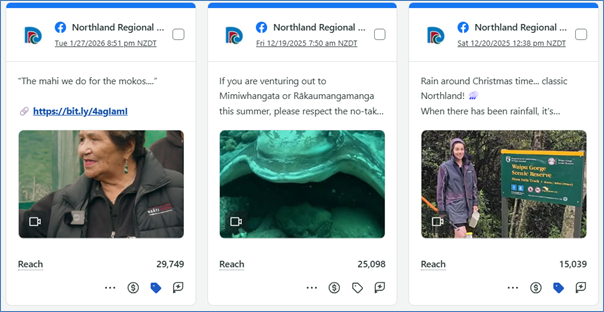
*Reach: total number of people who saw the content.
Sentiment: Positive sentiment related to acknowledging volunteers, kaimahi (staff) and community partnerships. Negative sentiment was primarily centred around poor water quality and perceived unfairness of the no-take protected marine area rules.
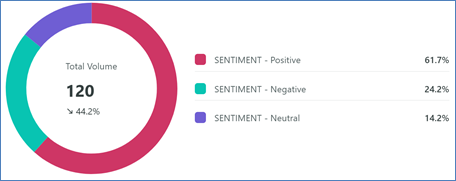
Top website pages:
|
Page |
Views |
|
54,335 |
|
|
19,974 |
|
|
4,932 |
|
|
3,618 |
|
Sep-25 |
Oct-25 |
Nov-25 |
Dec-25 |
Jan-26 |
|
|
WEB |
|
|
|
|
|
|
# Visits to the NRC website |
58,790 |
84,925 |
51,476 |
50,723 |
79,654 |
|
E-payments made |
40 |
25 |
24 |
9 |
10 |
|
# subscribed web alerts (cumulative) |
1,749 |
1,757 |
1,790 |
*N/A |
1,838 |
|
# subscribed to eNewsletters (cumulative) |
5,568 |
5,576 |
5,585 |
*N/A |
4,208 |
|
Cdem sOCIAL MEDIA (CUMULATIVE) |
|
|
|
|
|
|
# CDEM Facebook followers |
39,775 |
40,025 |
41,752 |
41,759 |
43,545 |
|
# CDEM Overall Facebook Reach (30D) |
195,981 |
181,273 |
339,874 |
146,461 |
1,445,473 |
People & Culture
Health & Safety:
· Completion of the 2025 Health & Safety deep‑dive programme is largely on track, with the majority of sessions now finalised. These reviews have provided increased clarity on strategic priorities and have offered a stronger basis for assessing whether the programme is contributing to measurable improvements. Follow‑up on the remaining deep dives is being progressed as a priority.
· Quarterly reporting continues to present a clear view of incident trends, key risk areas, and associated mitigation activities. This information supports evidence‑based decision‑making and assists in identifying emerging operational or resourcing pressures that may require management attention.
· Vehicle‑related incidents remain the most frequently reported category. A significant proportion of these involve near misses or evasive action taken to avoid other drivers. Reporting in this area continues to improve, providing greater visibility of underlying risks and enabling more targeted mitigation where practicable.
· The introduction of Health & Safety‑specific KPIs for managers is intended to reinforce leadership accountability and ensure alignment between performance expectations and organisational culture objectives. These KPI’s will be rolled out as part of the annual performance review and goal setting.
Employment Relations:
· FTE levels increased during the quarter, reaching 346 in December. This trend reflects the temporary uplift associated with Scholarship recipients and Summer Interns completing their placements over the summer period. FTE and headcount are expected to reduce again as these fixed‑term engagements conclude in January and February.
· A correction has been applied to the turnover statistics for July, August, and September, and this amendment has been highlighted accordingly in the reporting.
· Turnover increased over the quarter, reaching 12.50 percent at the end of December. Based on exit interview data, turnover is largely based on relocating to a different region or country, other career opportunities, retirement, and family reasons.
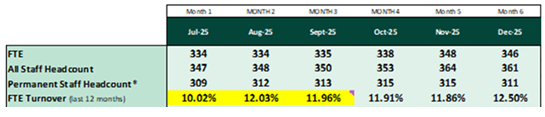
Property Update
· The Whangarei HQ Office lift replacement project has the shaft preparation well underway and lift delivery into New Zealand now having occurred. Lift services are expected to be out of commission into March 2026 with availability late in the month.
· A Whangarei architectural firm, Design Group Architects H&K, has been approved as the Lead Design Consultant for the Multi-Agency Emergency Coordination Centre (MACC), bringing with them further local support consultants including RS Eng.
· Council’s development partner, Argyle, has instructed the planner to arrange an online hearing with the commissioner to challenge WDC’s time restriction on a promising tenant’s ability to trade, beyond 4pm, within a planned development in Whangārei’s CBD.
IT Operations
The Laptop and Mobile Phone refresh programme continues and is on track for completion end of April 2026.
The enhanced security monitoring and reporting capabilities have now been fully implemented. Additional data feeds will be added to the monitoring environment duirng the post implementation phase through February. One legacy security product was successfully retired in December, and further consolidation work is planned through to April as we transition toward a more Microsoft‑centric security product suite.
Data and Information
Completing the upgrades of the GIS viewers is on hold until additional capacity is available.
The IRIS to ArcGIS system data integration process review is nearing completion to define a new design to resolve a current issue with the mismatch of data between systems. The replacement soltuions is scheduled for resolution by the end of February.
Significant progress has been made in documenting and sorting physical records identified during Modern Workspaces, alongside other reserves of undocumented physical records.
The Retention policy has been implemented within SharePoint document repository.
Projects
Project Axis
Asset Management - project status is amber with the NRC project team progress is constrained by continued issues with the Sandpit and Test environments. A plan to return to green status is expected in early February. In the meantime the project team are continuing with the large data cleansing task while environment issues are resolved and presenting to core business units data structures and assigning tasks to the business units.
Human Resource Information System (HRIS) - project status is green and tracking to plan. The project team is working well together and work on the Performance module started during January, with the Learning and Development module scheduled to start in February and run in parallel.
IRIS Next Generation
Sector Programme
The Programme pilot at the Otago Regional Council (ORC) continues. The system provider, Datacom, is onsite working closely with the ORC teams as they progress the implementation planning phase of the new system (Datascape). The work will be extensive in the timeframes stated. NRC are providing two project team members to support this effort. Their expertise enables a focused contribution to the programme within the limits of our available capacity. This enables NRC to have an early appreciation also of the scope of work and effort needed, when we start our implementation journey.
NRC Project
The project continues to work across teams to produce a current state system operating model (how the current system is used). This will serve as the blueprint to compare against the new system (Datascape), the future state operating model, enabling an early view of change required, supporting the project strategy of “ready early through transition”. NRC are supporting the pilot in part, contributing and influencing to add value to the final solution.
Fraud, Corruption and Dishonesty Statement
There are no new fraud investigations to report or any new incidents or suspected incidents of fraud at this time.
Local Government Official Information Requests
|
|
In December 2025 we received 10 LGOIMA requests, 19 less than December 2024. January requests also declined from 28 in January 2025 to 19 in January 2026. Across the past three full years, totals rose from 310 in 2023 to 368 in 2024 and then held steady at 368 in 2025.
|
|
|
LGOIMA requests for December 2025 and January 2026 were responded to within the required timeframe. |
Attachments/Ngā tapirihanga
Nil